
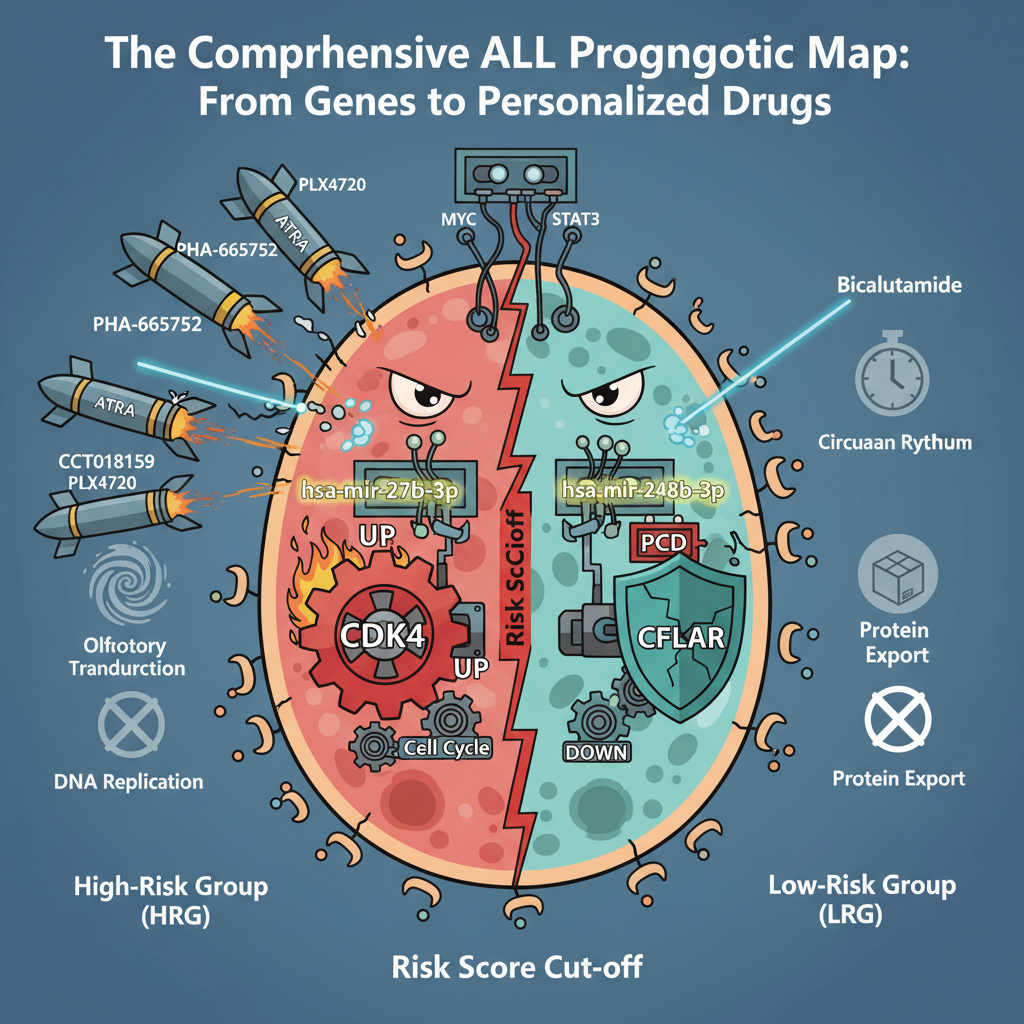
In this inaugural BioinfoXpert Podcast episode we explore a 2025 Scientific Reports publication by Jiarui Zhang and colleagues that asks a central question in leukemia genomics: can RNA methylation biology illuminate new ways to stratify patients? By linking N6-methyladenosine (m6A) regulators to multiple programmed cell death modalities, the authors build a gene signature that predicts outcomes in acute lymphoblastic leukemia (ALL).
Why m6A and Programmed Cell Death Matter
ALL therapies have steadily improved, yet relapse risk and treatment resistance remain. m6A is one of the most abundant RNA modifications and controls mRNA stability, translation, and splicing. Programmed cell death (PCD) pathways, such as apoptosis, pyroptosis, and ferroptosis, determine whether leukemic blasts respond to therapy or persist. The study integrates these two biological axes to uncover prognostic markers that conventional cytogenetics can miss.
"By connecting m6A enzymes with cell death programs, we reveal RNA-level vulnerabilities that could inform risk-adapted therapy in ALL," Zhang et al. noted.
How the Prognostic Signature Was Built
Study Workflow at a Glance
Data Integration
The team curated publicly available ALL transcriptomes and intersected m6A regulators with curated gene sets covering apoptosis, pyroptosis, ferroptosis, and necroptosis.
Model Construction
Candidate genes were filtered by differential expression and survival association, then assembled into a multigene score that separated discovery cohorts into high- and low-risk groups.
Validation
Independent datasets confirmed the prognostic value, and functional enrichment highlighted immune regulation, mitochondrial metabolism, and RNA processing pathways.
Clinical Context
The risk score aligned with established features such as minimal residual disease but contributed additional prognostic resolution.
What the Signature Reveals
The high-risk group showed coordinated upregulation of m6A "writer" enzymes and anti-apoptotic regulators, alongside suppressed expression of pro-death mediators. Low-risk patients displayed stronger immune signatures and oxidative phosphorylation genes that often correlate with treatment responsiveness. Importantly, the authors link specific m6A readers to PCD genes, suggesting post-transcriptional control as a driver of leukemic cell fate.
Implications for Precision Hematology
- Integrate RNA modification data: Incorporate RNA modification biology into ALL risk stratification frameworks.
- Track response biomarkers: Use candidate m6A-linked genes to monitor therapeutic response and relapse risk.
- Explore new targets: Investigate m6A regulatory enzymes and programmed cell death effectors as potential drug targets.
- Adopt multi-omic profiling: Build personalized treatment plans with combined genomics, epigenomics, and transcriptomics data.
Discussion Topics in This Episode
- m6A fundamentals: How RNA methylation intersects with leukemia biology.
- Programmed cell death spectrum: What apoptosis, pyroptosis, ferroptosis, and related modalities mean for ALL.
- Signature design: Considerations for building prognostic models from public datasets.
- Risk score integration: Ways prognostic signatures complement existing clinical markers.
- Future validation: Prospective trials and functional assays needed to translate findings into practice.
Key Takeaways
- m6A-driven programmed cell death genes offer an RNA-level window into ALL prognosis that complements genomic risk factors.
- Integrative signatures built from public datasets require independent validation but can surface therapeutic hypotheses quickly.
- RNA modification pathways are emerging as actionable levers in hematologic malignancies, warranting translational research investment.
Resources and Further Reading
License Attribution
This podcast episode discusses research from: Zhang, J. et al. "Identification and validation of prognostic genes associated with m6A-regulated programmed cell death in acute lymphoblastic leukemia" Scientific Reports (2025). Licensed under CC BY 4.0.
Research Paper
Identification and validation of prognostic genes associated with m6A-regulated programmed cell death in acute lymphoblastic leukemia
Jiarui Zhang et al. • Scientific Reports • 2025
View on Publisher →